Refacing, Refinishing or New Cabinets: How to Decide
Whether your cabinets need new doors, new finish or a full replacement depends on the boxes, the layout and how you cook.
October 17, 2026 · 4 min read
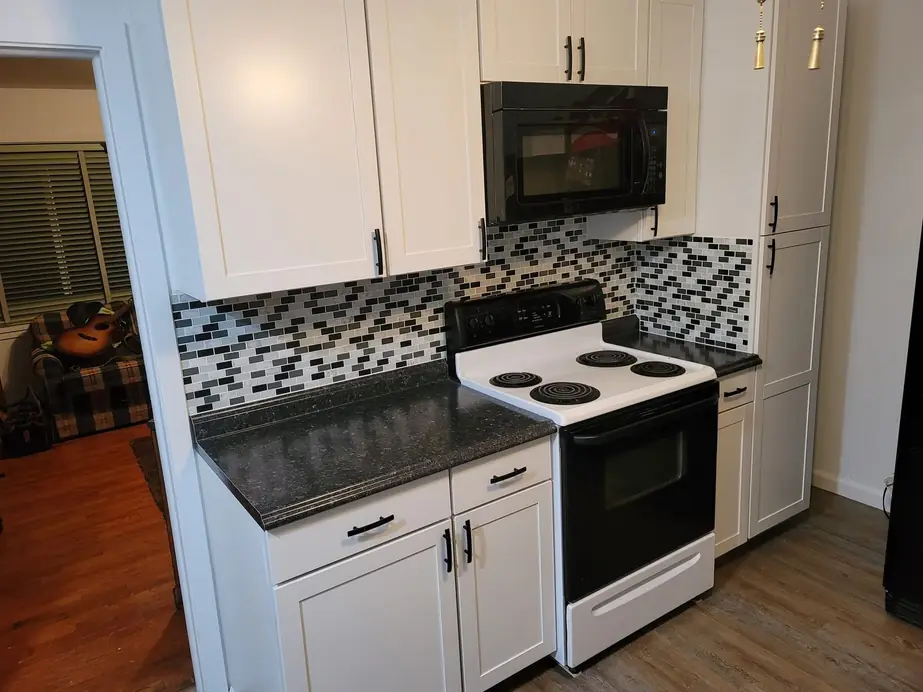
When a kitchen feels tired, the cabinets usually get the blame. They take up the most visual space in the room, and dated doors or worn finish make everything around them look older. But cabinets are also a big job to replace, so it is worth asking whether you need new ones at all. There are four real options: repair, refinishing, refacing and new custom cabinets. Each solves a different problem.
Look at the boxes first
The cabinet box is the structure: the sides, bottom, back and the frame at the front. The doors and drawer fronts are the part you see. Everything starts with a plain question: are the boxes in good shape? Open the doors and look at the base cabinets under the sink and next to the dishwasher, because that is where water damage collects. Press on the bottom panel. If it is soft, swollen or stained, the box has a moisture problem that a new coat of paint will not fix.
Check how the doors hang, whether the drawers slide, and whether the boxes still sit level and tight to the wall. Sound, square, solid boxes are a good foundation for the cheaper options. Boxes that are damaged, sagging or poorly built are the best argument for starting over.
Then look at the layout
The second question is whether the kitchen works. Refacing and refinishing keep every box where it is, so they cannot fix a bad layout. If the refrigerator door hits the island, if there is no counter beside the range, if one corner is dead space nobody can reach, those are layout problems. Changing them means new cabinets and layout design, and often changes to the electrical and countertops as well.
Refinishing
Refinishing keeps your existing doors and boxes and renews the finish: cleaning, sanding as needed, and repainting or restaining. It suits solid cabinets that are in good condition but look worn, or whose color you have simply outgrown. It does not change the door style, so the profile you have is the profile you keep. Real wood and well-built doors respond best.
Refacing
Refacing goes one step further. The boxes stay, but the doors and drawer fronts are replaced, and the visible frame at the front of the boxes is covered with a new surface to match. The result looks like a new kitchen without removing the cabinets, and it lets you change the door style.
Refacing makes sense when the layout is fine, the boxes are sound, and the main complaint is how the cabinets look. Recommended Remodeling offers refacing and refinishing, along with cabinet repairs, so the honest answer can be tailored to what is actually on your walls.
New custom cabinets
New cabinets are the right call when the boxes are damaged, when the layout needs to change, or when you want features the old ones cannot offer. Custom design lets cabinets be sized to the room instead of the other way round, so a wall of 30-inch boxes with a gap at the end can become a run that fills the space. Cabinet design and installation are done together, which matters, because a good cabinet installed badly does not look good for long. Doors need to align, boxes need to be level and plumb, and countertops need a solid, flat base.
New cabinets usually involve countertops as well, and Recommended Remodeling installs granite, quartz and laminate counters, with backsplash, trim and painting as part of the same kitchen scope. Planning those together avoids the situation where a countertop has to be cut around cabinets that were installed first.
Repairs are a legitimate answer
Sometimes the problem is smaller than it feels. A door that will not stay shut, a drawer that sticks, a cracked panel or a sagging shelf can often be repaired without touching the rest. If most of the kitchen is fine and two or three cabinets are the issue, repair is an honest option. A contractor who offers repair, refinishing, refacing and new construction can tell you which one fits.
Organization, whatever you choose
Cabinet organization is where a kitchen gets better to use every day, and you can add it to any of the options above. Pull-out shelves bring the back of a deep base cabinet to you, instead of making you kneel and reach. Drawer dividers stop utensils, knives and lids from becoming one pile. A tray divider next to the oven, a pull-out for pots, a spice drawer: these are small changes that change how you move in the room.
- Pull-out shelves in deep base cabinets
- Drawer dividers for utensils, knives and lids
- Vertical dividers for baking sheets and cutting boards
- Pull-out storage for pots and pans
If you are not sure which route fits, a consultation will answer it faster than guessing. The cabinets page on this site describes design, installation, refacing, refinishing, repair and organization, and you can reach Recommended Remodeling at 509-464-9873 any day from 7 am to 8 pm.
Recommended Remodeling, 509-464-9873
Call 509-464-9873More articles
Planning a Bathroom Remodel Before Anything Comes Out
Most bathroom surprises come from decisions that were never made, so make them while the walls are still closed.
Choosing Floors Room by Room: Tile, Hardwood, Laminate, Vinyl Plank or Carpet
The best floor for your house is rarely one material throughout, and the right choice depends on what the room has to put up with.