Choosing Floors Room by Room: Tile, Hardwood, Laminate, Vinyl Plank or Carpet
The best floor for your house is rarely one material throughout, and the right choice depends on what the room has to put up with.
October 17, 2026 · 4 min read
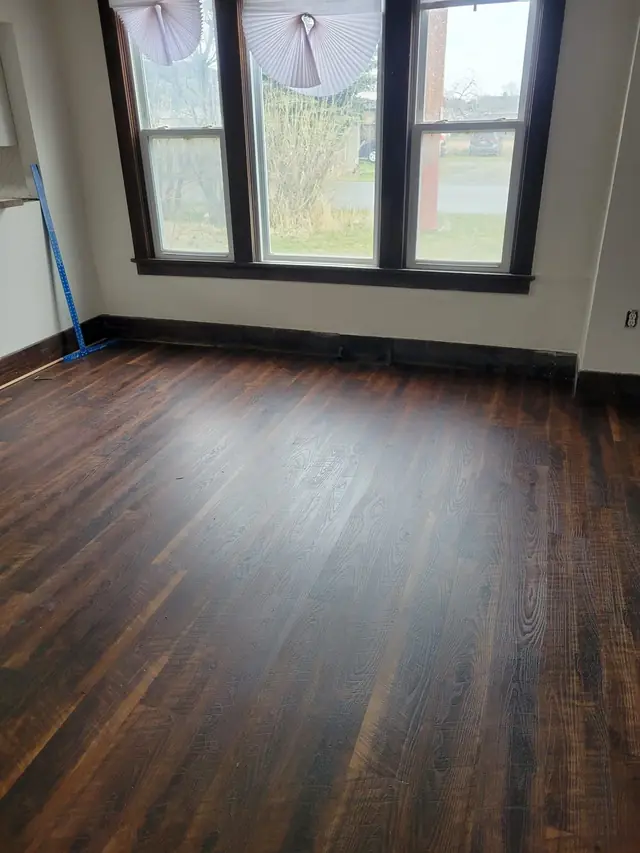
People often start a flooring project by picking a look and then asking whether it will work. It goes better the other way around. Every room asks something different of its floor. A bathroom has to survive water. A hallway has to survive boots and a dog. A basement has to cope with concrete below it. Once you know what the room demands, the sensible list shrinks quickly, and the rest is taste.
The five materials in plain terms
Hardwood, in species such as oak, maple and cherry, is the classic. It can usually be sanded and refinished more than once, which is part of why it lasts. It dislikes standing water and large swings in moisture. Cherry is softer than oak or maple, so it shows dents sooner, something worth knowing if you have a busy household.
Laminate is a photographic layer on a fiberboard core. It is hard to scratch and costs less to install than many alternatives, but the core swells if water gets into the seams, so it suits dry rooms best. Tile, whether ceramic, porcelain or natural stone, is the toughest against water and wear, and the coldest and hardest underfoot. Vinyl and luxury vinyl plank are the practical middle: warm, quiet, water-resistant on the surface, and available in convincing wood and stone looks. Carpet is the softest and quietest option, and the one that holds on to moisture and spills if they reach it.
Bathrooms
In a bathroom the choice is nearly always tile or vinyl plank. Both are named in the bathroom scope Recommended Remodeling offers, and both can be done well. Tile gives you the broadest design range and suits a walk-in shower floor continuing into the room. Vinyl plank is easier on bare feet and easier to replace later. Hardwood and carpet are poor fits here, since a bathroom will eventually see a splash, a leak or a wet towel, and a floor that cannot tolerate that is a floor you will replace early.
Kitchens
Kitchens take spills, dropped pans and constant foot traffic. Tile, hardwood and vinyl are the three installations commonly done in kitchens, and each has a reason to pick it. Tile shrugs off water and heat, but a dropped glass rarely survives it and standing on it for an hour is tiring. Hardwood is warm and continues naturally into adjoining rooms, though it needs wiping up quickly near the sink and dishwasher. Vinyl plank is forgiving, comfortable and tolerant of water. Whichever you choose, plan the floor together with the cabinets.
Hallways, living rooms and bedrooms
Dry rooms give you the widest choice. Hardwood and laminate are natural here, and a hallway is where wear shows first, so pick a surface that hides scratches. Carpet earns its place in bedrooms for warmth and quiet, and in family rooms where children sit on the floor. A single continuous floor through an open living area makes the space read larger, while changing material at a doorway marks a natural boundary. Plan where the floor ends, because a transition strip is something you will walk over for years.
Basements
Basement floors sit on or near concrete, and concrete moves moisture vapor even when it looks dry. That is why basement finishing calls for moisture-aware flooring choices rather than simply whatever looks best upstairs. Vinyl plank and tile do better here than solid hardwood. Carpet is common in basement family rooms and works when the slab is dry and the carpet is laid over a suitable pad, but it is the least forgiving if water ever arrives. Before choosing, check the slab for damp spots, staining or a musty smell, and deal with the cause first. No floor covers a moisture problem for long.
Preparation is half the job
Every one of these materials performs according to what is under it. Tile needs a flat, solid base, and larger tiles need a flatter one. Plank flooring telegraphs bumps and dips in the subfloor. Hardwood wants a stable, dry subfloor and time to adjust to the house. A good installer spends much of the job on things you will never see.
Repair or replace
Not every worn floor needs to come out. Flooring repair is part of what Recommended Remodeling does, alongside installation. A section damaged by water, a few cracked tiles, or planks that have lifted can often be dealt with locally, provided the cause has been fixed. Replacement makes sense when damage is widespread, when the underlayment has failed, or when you are changing the room anyway.
A simple way to decide
- Wet rooms: tile or vinyl plank.
- Dry rooms with heavy traffic: hardwood, laminate or vinyl plank.
- Bedrooms and basement family rooms: carpet is on the table, with a dry slab.
- Rooms flowing into each other: choose one floor that works for both, or plan the transition on purpose.
If you are weighing materials for more than one room, Recommended Remodeling can walk through them with you at a consultation and put the choices in a detailed plan. The flooring installation and repair page covers the materials the company works with, and you can reach Chad Peetz and the team at 509-464-9873, seven days a week from 7 am to 8 pm.
Recommended Remodeling, 509-464-9873
Call 509-464-9873More articles
Planning a Bathroom Remodel Before Anything Comes Out
Most bathroom surprises come from decisions that were never made, so make them while the walls are still closed.
Finishing a Basement: What Each Room Needs Before You Start
A finished basement succeeds or fails on decisions made before the first stud goes up, starting with water.